


Profile
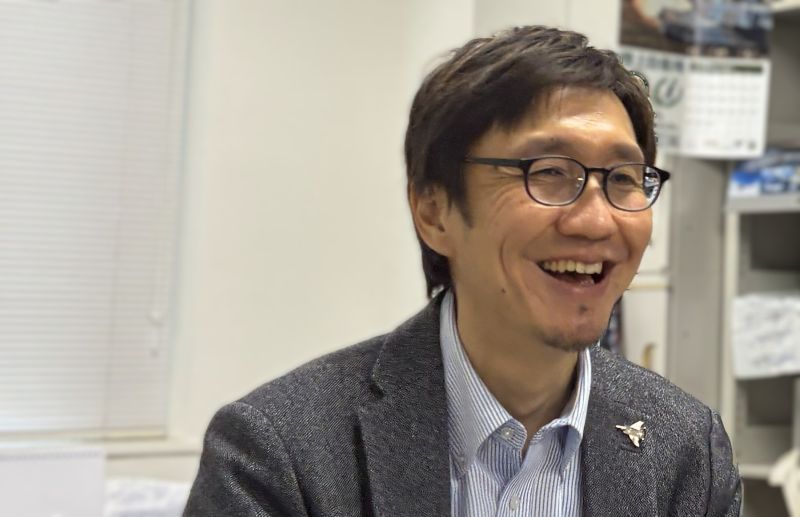
Professor Heng received his PhD in International Relations from the London School of Economics and Political Science where he also completed his BSc in International Relations and History (First Class Honours). He has held academic posts at Trinity College Dublin (Ireland), the University of St Andrews (Scotland), and the Lee Kuan Yew School of Public Policy at the National University of Singapore, where he also served as Assistant Dean for Research. He has served in his current position since 2016.
His areas of expertise include international politics, UK–Japan defence cooperation, security studies, strategic studies, strategic foresight, and risk management. His publications include Managing Global Risks in the Urban Age: Singapore and the Making of a Global City (Routledge, 2016), among others.
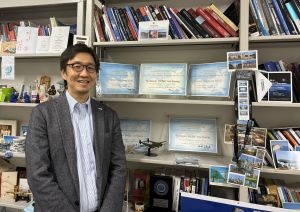
Stepping into Professor Heng Yee Kuang’s office is an arresting experience. Shelves overflow not only with books, but also with colourful memorabilia from military events, specialist magazines, and carefully preserved press clippings. One is immediately struck by the sheer breadth of his engagement with his field. A scholar of security studies, Professor Heng’s research centres on military exercises, strategic foresight and risk management — in other words, on how to identify early signals of the future and turn them into actionable advantage.
In today’s rapidly shifting international environment, policymakers are under growing pressure to interpret an uncertain future with greater acuity. What, then, does it mean to possess the ability to “use” the future? We asked him.
On Future Literacy and Scenario Planning
— In your recent research, you discuss “future literacy” and the corporate origins of “scenario planning”. When did these approaches begin to be adopted in the government sector?
Heng: At the heart of national security lies a simple question: when a worst-case scenario that exploits national vulnerabilities occurs, how effectively can we mitigate its impact and respond with speed? Simulating such contingencies and preparing in advance is fundamental.
One must be clear that scenario planning does not attempt to predict the future. Rather, it constructs multiple plausible futures and enables planners to rehearse how we might survive and operate within each of them. Governments began adopting this approach in the 1980s, if not earlier, and it now has a long institutional history.
Singapore is a particularly well-known example. For a small island state with an acute sense of vulnerability, a failure to properly anticipate and prepare for the future could have existential consequences. Beginning in the 1980s, Singapore learned forecasting techniques from Royal Dutch Shell — then regarded as possessing some of the most advanced methods in the world — and began experimenting with their use in civil service training.
In 1995, the Prime Minister’s Office established a Scenario Planning Office (later renamed the Strategic Policy Office) to develop whole-of-government scenarios. In 2009, it created the Centre for Strategic Futures as a dedicated in-house think tank.
To make effective use of futures literacy requires both skills and mindset. Civil servants are often consumed by operational day-to-day responsibilities, yet it is essential to designate space — in both time and institutional setting — for systematic reflection on the future. One must adopt an active, not passive, posture towards detecting what lies ahead.
The governments of the United Kingdom and Singapore place particular emphasis on techniques such as horizon scanning — the early identification of emerging risks — and the Delphi method, a structured process for converging expert judgement through iterative consultation. Considerable resources are invested in workshops to equip officials with these tools.
What is crucial is that the learning framework is embedded as part of organisational infrastructure. Singapore, drawing lessons from the British experience, has developed its own foresight toolkit and distributes it online across government agencies. This enables different ministries to identify early signals and trends to prepare for technological and societal change using a common methodology. Singapore and the UK also engage in intergovernmental exchanges of expertise and experiential knowledge among their officials.
Building Organisational Capacity to Use the Future
— Why is “prediction” insufficient?

Heng: In today’s complex international environment, it is impossible to pinpoint the future as a single outcome. Statistical forecasting usually extrapolates patterns from past data. Yet we increasingly face discontinuities where historical patterns offer little guidance and are non-linear.
Consider a sudden escalation in geopolitical tensions that halts exports of a critical commodity. An economic forecasting model may treat this as an “exogenous shock”, but for a nation it can be a matter of survival. Scenario planning deliberately places on the table events that may seem unlikely but would be catastrophic if realised.
— Looking at Japan, it sometimes appears that such organisational capacity-building is lagging behind.
Heng: There are, however, encouraging developments. Last year, my institution, GraSPP, signed a memorandum of understanding with Japan’s Ministry of Internal Affairs and Communications and the OECD. We have held informal discussions with ministry officials on future scenarios for Japan 30 years from now, particularly for rural areas facing demographic decline. Efforts to elevate “future literacy” within public-sector capability are now gaining momentum in Japan as well.
Joint Military Exercises as a Sign of a “New Reality”
— In terms of preparing for the future, Japan has recently seen unprecedented levels of joint military exercises with allies and partners.
Heng: Over the past two to three years, European involvement has reached historically significant levels. The deployment to Japan of the UK Carrier Strike Group 25 (CSG25), led by HMS Prince of Wales, and Norway’s dispatch of a quarter of its frigate fleet for six months to escort the CSG25 all the way to the Indo-Pacific region are emblematic. To mark this momentous visit, GraSPP co-hosted a public roundtable discussion with the British and Norwegian embassies.
The backdrop is the war in Ukraine. The phrase “Ukraine today, East Asia tomorrow” has gained currency. European states now view potential conflict in the Taiwan Strait or the South China Sea — and its devastating consequences for global trade routes — as an economic risk to themselves.

— So multinational exercises themselves become a vast form of joint scenario planning?
Heng: Precisely. Large-scale exercises are essentially processes for stress-testing “what-if” scenarios: What if communications networks and undersea cables are disrupted? What if a key port is blockaded? Before missiles ever fly, how do we prevent supply chain disruption caused by cyberattacks or maritime blockades?
Japan, the United States, the United Kingdom, France, Australia, Germany, Italy, the Netherlands, and the Philippines, and many other exercise partners are learning together and sharing operational experience.
— So the value of repeated exercises goes far beyond simply building familiarity?
Heng: The key concept is interoperability. This is not limited to technical compatibility in communications or weapon systems. It also includes procedural, legal, and human interoperability.
For Japan, the greatest barrier is not merely language in the narrow sense. English-speaking and NATO countries share 75 years of accumulated experience from joint exercises. Embedded within that history is a shared cognitive framework, norms, and practices — tacit knowledge that Japan has not historically shared. Repeated exercises with the US, the UK, European states, Australia, and India allow Japan to develop a better intuitive understanding of how partners think and act in crises. This tacit dimension can only be acquired with repeated interactions through joint exercises.
Economic Security and the Defence Dividend
— From the perspective of economic security, how should we evaluate these military developments?
Heng: Military exercises help generate confidence among firms and investors. No matter how sophisticated economic policies or stockpiling strategies may be, they cannot function without an overarching security framework to protect them. Joint training helps convey the message that regional stability will be maintained through commitment of major powers and partners, enabling companies to invest and build supply chains with greater assurance and predictability.
— Japan’s recent defence policy — including increased defence spending and participation with the UK and Italy in the Global Combat Air Programme (GCAP) to develop a next-generation fighter aircraft — suggests a major shift.
Heng: International collaborative development such as GCAP is highly significant. Pursuing such an ambitious high-profile project without direct US involvement marks a turning point for Japan’s industrial base. This also relates to the concept of the defence dividend: in countries such as the UK, investment in defence industries is associated with employment, technological innovation, and strengthened supply chains, contributing positively to economic resilience.
In Japan as well, debate is emerging that moves beyond the outdated negative image of defence industry purely in terms of arms sales and war, towards recognising defence industrial capacity as a strategic sector of economic growth under Prime Minister Takaichi Sanae.
In the face of geopolitical risk and uncertainty surrounding future US administrations, Japan must share scenarios with a wider range of partners and cultivate practical experience through training. That, I believe, is the only way to overcome strategic surprise.
(Interviewer and Editor: Ayako Hirono, Special Guest Professor,
Faculty of Policy Management, Keio University)