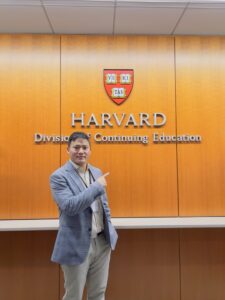



My Journey to GraSPP

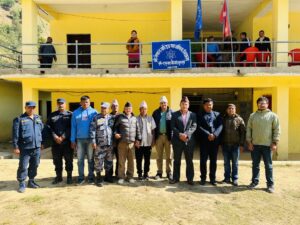
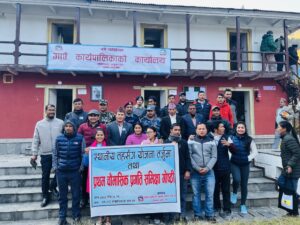
Before arriving at the Graduate School of Public Policy (GraSPP), my professional life was rooted in Nepal’s public administration. I worked in the local to central level and remote to urban areas, dealing daily with public service delivery in Nepal. I eventually had an opportunity to serve as a Chief District Officer, the administrative head of the district, a position that carries both authority and high responsibility.
I was proud to serve my country, but I also experienced a clear limitation. My understanding of public policy was largely shaped by operational-level practices and immediate administrative needs. I knew how to implement rules, manage crises and respond to citizens’ grievances, but I often wondered why certain issues kept repeating and why some reforms failed to achieve the desired effect. I felt that my “policy world” was small and largely inward- looking.
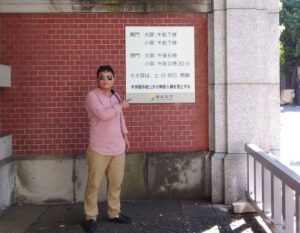
The decision to study at GraSPP came from a desire to overcome that limitation. I wanted to understand how other developed and developing countries addressed similar challenges, to learn from different systems, and develop a more analytical and comparative way of thinking. For me, receiving the opportunity to join GraSPP, was more than a personal achievement; it was moreover an investment to the future of my public service journey.
Experiencing the World
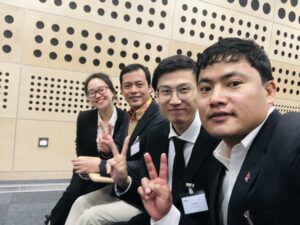
GraSPP opened a completely new horizon for me. For the first time, I found myself in an international classroom, surrounded by students from various continents, professional backgrounds and disciplines. Listening to their lived experiences in government, international organizations and civil society, I realized that many of the challenges we face in Nepal, including inequality, health system constraints, governance gaps, and climate vulnerability are actually shared across borders.
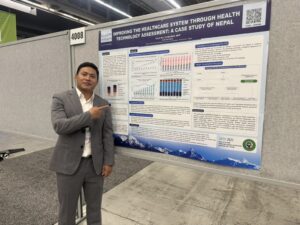
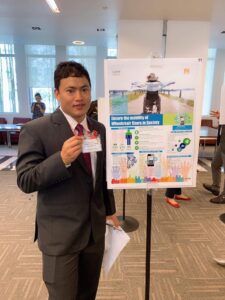
Through courses, seminars and especially the GraSPP Policy Challenge and Global Public Policy Network Conferences, I was exposed to a wide range of global debates. There used to be discussion on how different countries design public service delivery, finance the health sector, structure social protection, manage migration and respond to global crises. Through these debates and discussions, I learned to connect my practical experience with theoretical frameworks and to understand how evidence, institutions and political context interact in shaping policy outcomes. This entire process gave me a new level of confidence. I began to feel that my local experience was not “lesser”, but rather an important part of a larger global puzzle.

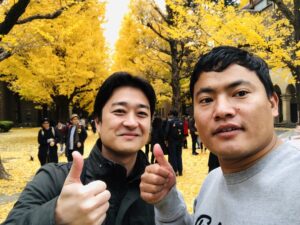
Living and studying in Japan simultaneously taught me lessons beyond the classroom. The humility, politeness and discipline rooted in Japanese culture deeply influenced me. Simple gestures of queuing in an orderly way, keeping public spaces clean, apologizing for inconveniences, honoring time, demonstrated how social norms support effective governance. I saw how trust is built through a combination of formal rules and consistent, respectful everyday behaviors. In this way, GraSPP helped me truly “experiencing the world”. I gained exposure to diverse perspectives, developed a clear understanding of global public policy challenges and felt encouraged to think beyond the boundaries of my previous experience. My limited horizon of knowledge was replaced by a broader, more critical, and wider understanding of what public policy can and should achieve.
Serving My Nation
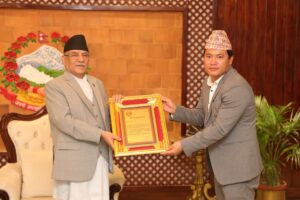 Even while I was in Tokyo, my thoughts continuously returned to Nepal. I often imagined the long queues at district offices, the citizens waiting for services and the communities affected by slow or unequal service delivery. GraSPP strengthened my desire to use international learning for the benefit of my fellow citizens.
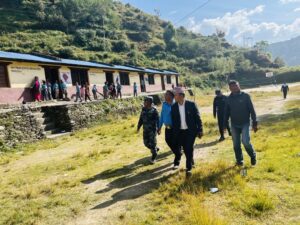
After returning home and resuming my role as a civil servant, including serving as a Chief District Officer, I began to notice a clear difference in how I approached my duty and assumed my responsibilities. The confidence I gained at GraSPP enabled me to participate more actively in discussions, propose ideas based on comparative experience and communicate more effectively with stakeholders. The exposure to international debates also made me more aware of global standards and innovative practices that could be adapted to our context.
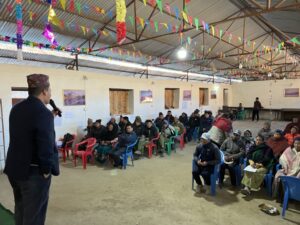
I also tried to reflect my work on the humility and kindness I learned from the Japanese society. I became more aware of listening attentively, speaking politely and treating with dignity when dealing with citizens and citizens as service recipients. I realised that even small changes in attitude and conduct can gradually transform the relationship between the state and people. In public service delivery, I now try to look beyond individual grievances and investigate underlying systemic problems and reasons. Delays, confusion or dissatisfaction are not only administrative problems; they are signs that policy design, communication or coordination may need improvements. With the tools and perspectives gained at GraSPP, I feel better equipped to identify such gaps and to offer more effective and fair solutions. The appreciation I receive from citizens and institutions not only motivates me but also reminds me to remain committed, disciplined and open to learning.
Lessons for the Future
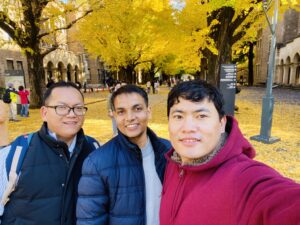
My experience at GraSPP made a profound difference in my life as a civil servant. Before my studies, I was committed but lacked a broader perspective. After GraSPP, I feel more confident, informed and aware of the global context in which Nepal operates. I understand that public policy is both a technical and a human endeavor, requiring sound analysis as well as empathy and integrity.
For me, “Experiencing the World-Serving My Nation” is not just a phrase; it is a continuous responsibility. The international exposure and academic training I received are meaningful only if they contribute to better governance and more dignified public services at home. I am determined to continue improving, apply my learning in practice and inspire others in the public sector to integrate global knowledge with strong commitments to local needs. This is the true essence of my emotionally embedded GraSPP journey, a journey woven as my lifetime guidelines. To future students and public servants considering GraSPP, my message is simple and sincere. You may arrive unsure, yet depart renewed: refined in spirit, open in vision, and anchored in purpose.